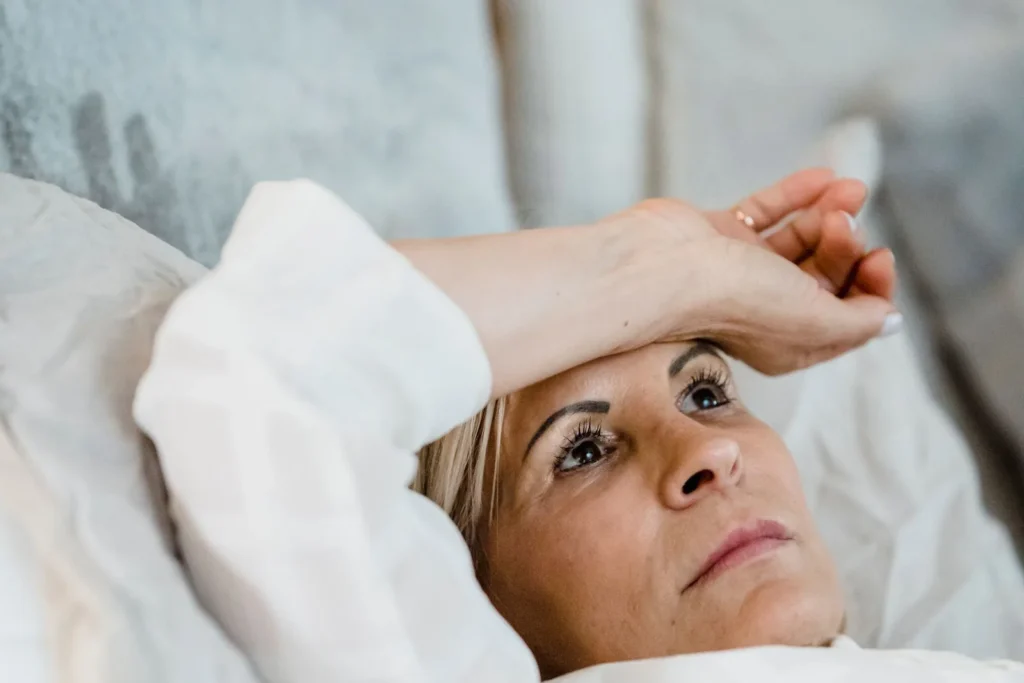
If you used to sleep well and now find yourself staring at the ceiling at 3am, you are not imagining it and you are far from alone. Sleep problems are among the most common complaints during the menopause transition. The National Institute on Aging notes that many women have trouble sleeping during this time, whether that means falling asleep, staying asleep, or waking far too early.
Poor sleep is not a minor annoyance. It affects mood, memory, appetite, weight and long-term health. The encouraging part is that menopause insomnia responds well to treatment once you understand what is driving it.
Why Menopause Disrupts Sleep
There is rarely one single cause. Most women have a combination of the following.
Night sweats
Night sweats are the most obvious culprit. Even episodes you do not fully remember can pull you out of deep sleep. If you wake hot or damp, treating vasomotor symptoms is usually the first step.
Falling estrogen and progesterone
Estrogen influences body temperature regulation and the brain chemicals involved in sleep and mood. Progesterone has a mildly sedating effect. As both shift and decline, sleep can become lighter and more broken, even without hot flashes.
Anxiety and mood changes
Many women experience new or worsening anxiety in perimenopause. A racing mind at night and early-morning waking are classic patterns. Our guide to menopause anxiety explains why this happens.
Sleep apnea
The risk of obstructive sleep apnea rises after menopause. It is often missed in women because symptoms can look like insomnia or fatigue rather than loud snoring. If you wake unrefreshed, have morning headaches, or a partner notices pauses in your breathing, ask about a sleep study.
Other contributors
Needing to urinate at night, joint aches (see menopause joint pain), restless legs, and medications can all play a part. Life itself also gets busy in midlife: caregiving, work stress and teenagers keeping late hours.
The Most Effective Treatment: CBT-I
Cognitive behavioral therapy for insomnia (CBT-I) is the first-line treatment for chronic insomnia recommended by major medical organizations, ahead of sleeping pills. It has been studied in women in midlife and shown to improve sleep during the menopause transition.
CBT-I usually runs over four to eight sessions, in person, by video or through a structured app or online program. Its core components are:
- Sleep restriction (sleep window): temporarily limiting time in bed to the time you actually sleep, which builds sleep pressure and makes sleep deeper and more consolidated.
- Stimulus control: using the bed only for sleep and sex, and getting up if you are awake for a long stretch, so your brain re-learns that bed means sleep.
- Cognitive work: addressing anxious thoughts about sleep (“If I do not sleep, tomorrow will be a disaster”) that keep you alert.
- Consistent wake time: the same wake-up time every day, including weekends.
It takes effort for a couple of weeks, but the results tend to last, unlike medication.
Fixes You Can Start Tonight
- Keep the bedroom cool, dark and quiet. Cooler rooms help both sleep onset and night sweats. Breathable bedding helps too; see the best cooling sheets for night sweats.
- Get morning daylight. Bright light soon after waking helps anchor your body clock.
- Cut caffeine after noon and keep alcohol modest. Alcohol may help you fall asleep but it fragments sleep later in the night and is a common hot flash trigger.
- Build a wind-down routine. Thirty to sixty minutes of dim light and calm activity before bed.
- Do not clock-watch. Turn the clock away. Checking the time at 3am increases arousal.
- Move during the day. Regular exercise is linked with better sleep quality.
For deeper sleep-science resources and tools, the team at Good Sleep covers sleep habits in more detail.
Medical Options
Hormone therapy
If night sweats are waking you, hormone therapy is the most effective treatment for them, and better sleep often follows. Some research suggests micronized progesterone taken at bedtime may also support sleep. Read our full guide to HRT pros and cons.
Non-hormonal medication
Gabapentin at bedtime can reduce night sweats and help sleep. Low-dose SSRIs or SNRIs may help when mood and hot flashes overlap. Fezolinetant targets hot flashes directly. See non-hormonal treatments.
Sleep medication
Prescription sleep aids can be useful short-term in some situations but carry side effects and are not intended as a long-term fix. Over-the-counter antihistamine sleep aids can cause next-day grogginess and are generally not recommended for older adults. Discuss any sleep medication with your doctor.
What about melatonin and magnesium?
Melatonin is helpful for body-clock problems like jet lag, but evidence for menopause insomnia specifically is limited. Magnesium is widely used, but strong trial evidence for sleep is thin. Read more in our menopause supplements review.
When to See a Doctor
Talk with a clinician if poor sleep lasts more than a few weeks, affects your daytime functioning, or comes with snoring, breathing pauses, low mood, or leg discomfort. Bring a two-week sleep diary; it makes the appointment far more productive.
A Two-Week Sleep Diary
Before changing anything, track your sleep for two weeks. Each morning, note:
- What time you went to bed and what time you turned off the light
- Roughly how long it took to fall asleep
- How many times you woke, and why if you know (hot, anxious, bathroom, noise)
- Your final wake time and the time you got out of bed
- Caffeine, alcohol and exercise the day before
- How rested you feel on a scale of 1 to 5
This record is the foundation of CBT-I and makes appointments far more productive.
How Sleep Restriction Works in Practice
Sleep restriction sounds counterintuitive, but it is one of the most effective parts of CBT-I. A simplified version:
- Use your diary to calculate your average actual sleep time, for example six hours.
- Set a sleep window equal to that time, usually not less than about five and a half hours. If you need to get up at 6:30am, your window might start at 12:30am.
- Get up at the same time every day, no matter how you slept.
- When you are sleeping for most of the time in bed for about a week, extend the window by 15 minutes.
It can make you sleepier for the first week or two, so take care with driving. People with certain conditions, such as bipolar disorder, seizures or significant sleep apnea, should only do sleep restriction under professional guidance.
What to Do When You Wake at 3am
- Do not check the time or your phone. Light and information both wake the brain up.
- If you are hot, cool down quickly: kick off a layer, flip your pillow, sip cold water.
- If you are awake and frustrated for what feels like more than 20 minutes, get up and do something calm in dim light, such as reading a paper book, and return to bed when sleepy.
- Try a calming technique: slow breathing with a longer out-breath, or a body scan from toes to head.
- Reframe the thought. “I’m resting, and my body will catch up” is less alarming than “Tomorrow is ruined.”
Sleep Apnea Warning Signs in Women
Sleep apnea is underdiagnosed in women. Possible signs include loud snoring, observed pauses in breathing, waking with a dry mouth or headache, daytime sleepiness, difficulty concentrating, high blood pressure and waking repeatedly without a clear reason. It is diagnosed with a sleep study, which can often be done at home, and treatments such as CPAP or oral devices can dramatically improve sleep and energy.
Building a Wind-Down Routine
A consistent routine signals to the brain that sleep is coming. An example: dim the lights an hour before bed, take a warm shower (the cooling afterward can help sleep onset), set out tomorrow’s clothes, read or listen to something calm, and keep the same bedtime and wake time within about 30 minutes, including weekends.
Common Sleep Myths
- “A nightcap helps you sleep.” Alcohol fragments sleep later in the night.
- “Lying in bed resting is the next best thing.” Long stretches awake in bed can strengthen insomnia.
- “You can catch up on weekends.” Irregular sleep times disrupt your body clock.
Frequently Asked Questions
Why do I wake at 3am every night during menopause?
Early-morning waking can be driven by night sweats, anxiety, changes in sleep architecture as estrogen falls, or needing the bathroom. Track whether you wake hot, anxious or needing to urinate; the pattern points to the fix.
Does menopause insomnia go away?
For many women it improves after the transition, especially once hot flashes settle, but insomnia can become a learned habit that persists. CBT-I works on that habit directly.
Can perimenopause cause insomnia even with regular periods?
Yes. Sleep changes often begin in perimenopause, while periods are still regular or only slightly changed. See our perimenopause symptoms checklist.
Is it safe to use HRT for sleep?
HRT is not prescribed as a sleep medication, but by treating night sweats it frequently improves sleep. Whether it is right for you depends on your age, health history and preferences.
How much sleep do I need in midlife?
Most adults need seven or more hours. Quality matters as much as quantity.
The Bottom Line
Menopause insomnia is common, but it is not something you have to accept. Treat night sweats if they are waking you, consider CBT-I for the sleeplessness itself, and rule out sleep apnea. Start with our complete menopause guide for the bigger picture.
Sources: National Institute on Aging; The Menopause Society; MedlinePlus.
This article is for educational purposes only and is not medical advice. Talk with a qualified healthcare professional about your symptoms and treatment options. See our editorial standards.