You are eating the same way you always have. You are just as active. And yet the scale creeps up, and your jeans fit differently, especially around the waist. Midlife weight change is one of the most common and frustrating experiences of the menopause transition.
Here is what is actually happening, what is a myth, and the strategies with the best evidence.
What Causes Menopause Weight Gain?
Aging and muscle loss
From around our 30s onward, we gradually lose muscle mass, and the loss can speed up around menopause. Muscle is metabolically active tissue, so less muscle means you burn slightly fewer calories at rest. This is one reason strength training is so important in midlife.
Estrogen and fat distribution
Research, including from the NIH-funded SWAN study, has found that during the menopause transition, fat mass tends to increase and lean mass decreases, and fat shifts toward the abdomen. Lower estrogen is associated with this move from a “pear” pattern (hips and thighs) toward an “apple” pattern (waist). This matters because visceral fat around the organs is associated with higher risk of heart disease and type 2 diabetes.
Sleep disruption
Poor sleep affects appetite hormones and can increase cravings and snacking. Many women in menopause are chronically under-slept because of night sweats and insomnia.
Stress and mood
Stress, anxiety and low mood can all affect eating patterns, activity and sleep.
Life changes
Midlife often brings more sitting, busier schedules, caregiving responsibilities and less time to move.
Myths About Menopause Weight Gain
- “HRT makes you gain weight.” Studies have not shown that hormone therapy causes weight gain. Some research suggests it may help limit the shift of fat toward the abdomen. See HRT pros and cons.
- “It is inevitable.” Body composition changes are common, but how much you gain varies widely and is influenced by habits.
- “You just need to eat less.” Under-eating, particularly too little protein, can accelerate muscle loss.
What Actually Works

1. Strength training
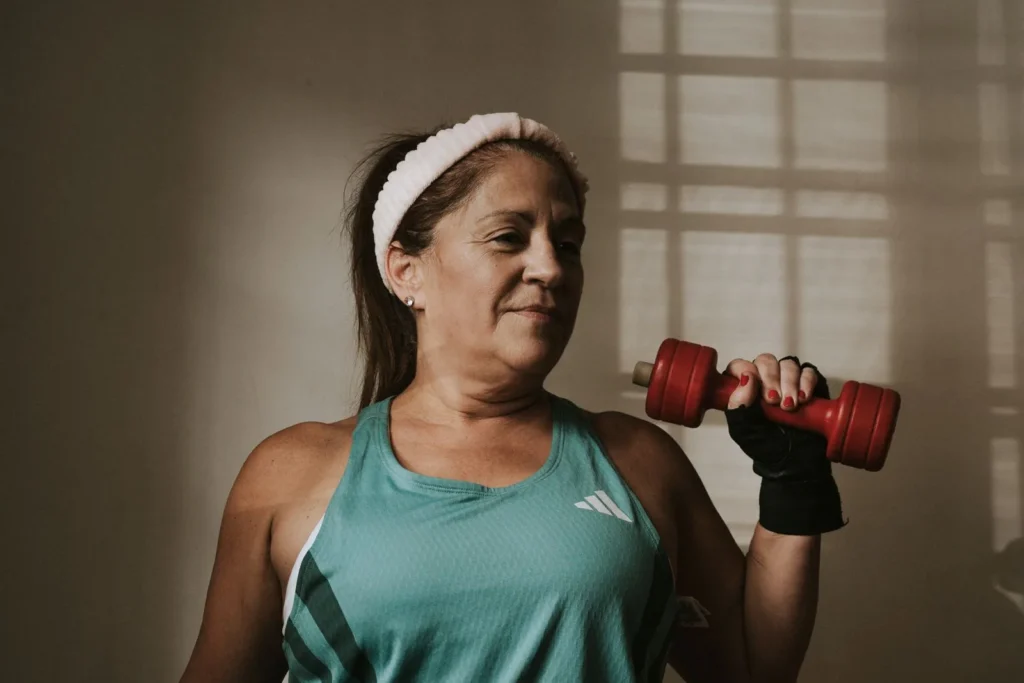
Resistance exercise is the single most important change for many women in midlife. It helps preserve and build muscle, supports metabolism, protects bone density, and improves blood sugar control. Aim for at least two sessions a week working all major muscle groups, as recommended in the U.S. Physical Activity Guidelines. Progressively increase the challenge over time.
2. Regular aerobic activity
The same guidelines recommend at least 150 minutes a week of moderate activity, such as brisk walking. Daily movement outside of formal exercise (walking, stairs, standing) adds up.
3. Protein at every meal
Adequate protein helps preserve muscle, particularly when combined with strength training. Spreading protein across meals, rather than loading it at dinner, may be more effective.
4. Fiber and whole foods
Vegetables, fruit, legumes, whole grains, nuts and seeds help with fullness, gut health and blood sugar. A Mediterranean-style eating pattern has good evidence for heart and metabolic health.
5. Limit alcohol
Alcohol adds calories, disrupts sleep and is a common hot flash trigger.
6. Protect your sleep
Treating hot flashes and night sweats, keeping a consistent sleep schedule and a cool bedroom can all help. For practical sleep tips, see Good Sleep.
7. Manage stress
Walking, yoga, social connection and therapy can all help.
8. Consider medical options
For women with obesity or weight-related health conditions, prescription medications such as GLP-1 receptor agonists may be appropriate. These require a discussion with a clinician about benefits, side effects, cost and the importance of preserving muscle with strength training and protein.
Focus on Waist, Strength and Health Markers
The scale is only one measure. Useful additional markers include:
- Waist circumference
- How your clothes fit
- Strength and fitness progress
- Blood pressure, cholesterol and blood sugar
- Energy and sleep quality
A Sample Week
- Monday: 30-minute brisk walk; strength training (squats, rows, push-ups, deadlifts with light weights)
- Tuesday: 30-minute walk or cycling
- Wednesday: Strength training
- Thursday: Yoga or stretching plus a walk
- Friday: Strength training
- Weekend: A longer walk, hike or swim; a rest day
Start where you are. Even short sessions are beneficial, and consistency beats intensity. If joint pain is a barrier, low-impact activities and guidance from a physical therapist can help.
When to See a Doctor
Talk to a clinician if you gain weight rapidly without explanation, or if weight gain comes with fatigue, feeling cold, constipation, or other new symptoms, since conditions such as thyroid disease can contribute. It is also worth checking blood pressure, blood sugar and cholesterol, because cardiovascular risk rises after menopause.
A Simple Day of Eating for Midlife Metabolism
There is no single “menopause diet,” but meals built around protein, fiber and whole foods tend to help with fullness, blood sugar and muscle maintenance. An example day:
- Breakfast: Greek yogurt or a soy yogurt with berries, oats and a spoon of nuts or seeds.
- Lunch: a large salad or grain bowl with beans or lentils, leafy greens, vegetables, olive oil dressing and a portion of chicken, fish, eggs or tofu.
- Snack: an apple with peanut butter, a handful of almonds, or hummus with vegetables.
- Dinner: salmon or tofu, roasted vegetables, and a modest portion of whole grains such as brown rice or quinoa.
- Drinks: water, sparkling water, tea or coffee earlier in the day, with alcohol kept occasional.
Notice the pattern: a protein source and plenty of plants at every meal, with mostly minimally processed foods.
Why Strength Matters More Than the Scale
Two women with the same weight can have very different health profiles depending on how much muscle and visceral fat they carry. Strength training can improve body composition even when the scale barely moves, by preserving muscle and reducing fat. Signs of progress include lifting heavier weights, climbing stairs more easily, better posture and clothes fitting differently around the waist.
A beginner strength routine, two or three times a week:
- Squats or sit-to-stands from a chair
- Push-ups against a wall, counter or the floor
- Rows with a resistance band or dumbbells
- Hip hinges or deadlifts with light dumbbells
- Glute bridges
- Planks or modified planks
Start with one or two sets of 8 to 12 repetitions and gradually increase the weight as exercises feel easier. If you are new to exercise or have health conditions, a trainer or physical therapist can help you start safely.
Sleep, Stress and Cravings
When you sleep poorly, hormones that regulate appetite shift in a way that can increase hunger and cravings for high-calorie foods, and willpower is lower when you are tired. Protecting sleep is therefore a weight strategy in its own right. Treating night sweats, keeping a consistent bedtime and limiting alcohol can all help. Similarly, chronic stress can push some people toward comfort eating; having a non-food stress outlet, such as a walk, a call with a friend or a few minutes of breathing exercises, can break the habit loop.
Setting Realistic Goals
Rather than aiming for a specific number on the scale, many women find it more motivating to focus on behaviors: strength training twice a week, walking daily, eating protein at every meal, and keeping alcohol to a set number of drinks. Small, consistent changes add up and are easier to maintain through the ups and downs of the transition.
Questions to Ask Your Clinician
- Could a thyroid problem, medication or sleep issue be contributing to my weight change?
- What are my blood pressure, cholesterol and blood sugar levels, and should they be checked more often?
- Would a referral to a dietitian or physical therapist help?
- Am I a candidate for weight-loss medication, and how would we protect muscle while using it?
- How might treating my hot flashes or poor sleep support my weight goals?
Alcohol and Midlife Weight
Alcohol is easy to underestimate. Beyond its calories, it lowers inhibitions around food, disrupts sleep and can trigger hot flashes. Many women find that their tolerance changes in midlife and that one or two glasses of wine affect sleep more than they used to. Setting alcohol-free days, switching to smaller pours, or alternating with sparkling water are practical ways to cut back without feeling deprived.
Frequently Asked Questions
How much weight do women gain during menopause?
It varies greatly. Many women gain gradually during midlife, with research suggesting an average of around 1.5 pounds per year in their 50s, but some gain much more and some none.
Why is menopause weight gain around the stomach?
Lower estrogen is associated with fat shifting from hips and thighs toward the abdomen.
Does HRT help with weight loss?
HRT is not a weight-loss treatment, but research has not shown that it causes weight gain, and it may help limit abdominal fat redistribution.
What is the best exercise for menopause belly fat?
There is no way to spot-reduce fat, but a combination of strength training and regular aerobic activity has the best evidence for improving body composition.
Should I try intermittent fasting?
Some women find time-restricted eating helps them manage intake. Evidence suggests it works mostly by reducing total calories. Make sure you still get enough protein.
The Bottom Line
Menopause weight gain is driven by a combination of hormonal changes, muscle loss, sleep disruption and lifestyle. Strength training, protein, fiber, good sleep and limited alcohol form the evidence-based foundation. Learn more in our complete menopause guide and symptoms list.
Sources: The Menopause Society; U.S. Department of Health and Human Services, Physical Activity Guidelines for Americans; Mayo Clinic.
This article is for educational purposes only and is not medical advice. Talk with a qualified healthcare professional about your symptoms and treatment options. See our editorial standards.